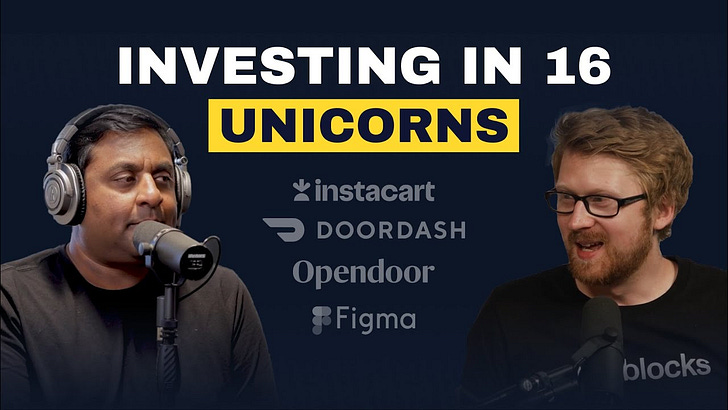
Oren Zeev runs one of the most successful venture firms in the world. $2.7B across 11 funds with no partners, no associates, no investment committee, no decks to fundraise, no memos, and no office.
He’s an early backer of Audible, Houzz, Chegg, Tipalti, and Navan, where a $50k check became a stake worth $1B+.
We get in to the 30-minute conversation that turned into his first fund, why most partners add negative value, the days his calendar is empty enough to surf on a Tuesday, his fund that had only five companies (and why diversification is a lie), how Navan went from a $90M run rate to zero in a month (and survived), why he does cross-fund investing, refusing DPI when LP’s want it, and the 30-year history of Israel’s startup economy.
A great listen for anyone building or running a fund, or curious how a solo GP competes with the big firms.
Support this Episode’s Sponsors
Monaco: The revenue engine for startups.
Flex: Sign-up for Flex Elite with code TURNER, get $1,000 here.
Clerk: Everything you need for authentication.
Numeral: The end-to-end platform for sales tax and compliance.
Inquire about sponsoring future episodes here.
Timestamps to jump in:
0:00 Running $2.7B with no team or partners
1:58 How one person can beat a team
4:43 Omission beats commission: why committees miss
7:13 What really fills a partnership's day
9:23 The returns business, not the production business
10:58 A week in his nearly empty calendar
16:49 The mistakes new solo GP's make
19:34 Eleven funds, zero slides
22:09 No thesis
24:28 Why diversification doesn't work
27:14 The fund with only five companies
30:44 TripActions insight: everyone hates their travel software
34:59 Paying employees to spend less
37:34 COVID: $90M run rate to zero
39:24 How Navan survived
41:34 A $100M round with no way to price it
44:29 Keeping the team: the real test of leadership
46:04 What Oren looks for in founders
50:39 Cross-fund investing, and "trust me, bro"
53:59 Always his own biggest LP
55:14 The DPI stand that cost him LP's
58:54 Decart, and the Anthropic deal
1:03:54 Inside the 30-year rise of Israel's tech ecosystem
1:07:19 The Yozma program that built an industry
1:11:59 Why Israelis build now instead of selling early
1:14:39 Moving to the Valley in the 2002 nuclear winter
1:17:19 Audible, and why the first home run matters
1:19:29 Leaving Apax, and going solo
1:22:04 Peter Thiel and a fund raised in 30 minutes
1:24:24 The second fund: 48 hours, still no deck
1:25:49 ICON: helping Israeli founders crack the Valley
1:30:29 The leader he admires most: Anwar Sadat
Find Oren on X / Twitter and LinkedIn
👉 Stream on YouTube, Spotify, and Apple
Transcript
Find transcripts of all prior episodes here.
Turner Novak:
Oren, welcome to the show.
Oren Zeev:
Thank you so much.
Turner Novak:
You’re probably one of the most unique venture capital investors. It’s just one person, you have no team, you don’t do meetings with all the other people on your team. I think the headline number, is it $2.5 billion?
Oren Zeev:
I think it’s more.
Turner Novak:
$2.7. Important to get that on the record. So how does that work? Because I thought you needed to have a big partnership and a bunch of people on the team.
Oren Zeev:
Turns out you don’t.
Turner Novak:
Why not?
Oren Zeev:
It turns out that many people think of this a certain way. Less so now, because there have been many examples, but if we go back 10, 15 years ago, people, including myself, did assume that you needed it. Because why? Because everyone does it, so probably that’s the way. We tend to assume that whenever we wish for something, somehow the fact that you have a partnership and different partners, and everyone weighs in, and supposedly everyone adds value, and you have an office and processes and all that, somehow it necessarily helps the cause.
My experience has been that it’s not necessarily true, and not only that, many times it’s the opposite.
Turner Novak:
Really? Everyone kind of parrots this, like, “We add all this value. We roll up our sleeves, we do all this research.” It’s probably harder to do that if it’s just one guy.
Oren Zeev:
Let’s break it down. First of all, most partners add very little value to each other.
Turner Novak:
So what’s an example of that? How does that play out? Because having a team, doesn’t a team work better than an individual?
Oren Zeev:
It doesn’t, I think. In my experience, let’s start with the most obvious things. I think speed is super important, and by definition, by yourself you can be faster than anyone.
Number two, at the end of the day, the result of what we do is a function of access and judgment. The ability to see and win deals, and judgment. On seeing deals, I’d rather source the deals myself. I don’t want to rely on another partner. If they really like the deal, most of the time they would pursue it themselves.
Let me take it back. When you have a partner, you look like 1,000 other partnerships. When you operate the way I do, you’re unique, and differentiation is always better than better, as the saying goes. So even in the access, it adds uniqueness, it adds differentiation, it adds speed, which is a huge differentiator in winning a deal. Also, it’s a better experience for the founders, because the founders meet me, they know I call the shots, I make the decision, I fall in love. Most of my investments I make within 24 to 48 hours. It’s a wow experience for the founders.
Turner Novak:
Hmm.
Oren Zeev:
The typical alternative experience is to go through a process where the partner pursuing the deal needs to convince their partners. First they need to communicate to their partners. They need to write a memo. That takes time. They ask all sorts of questions and do diligence that they don’t necessarily think is important, but they need to show that they did the work, because someone on the investment committee might have a question.
Turner Novak:
And sometimes in those meetings, you need to be able to ask. If you’re pitching it to me, I need to ask questions. So I need to come up with things to have you then do work to answer my questions, and they might not be important.
Oren Zeev:
Exactly. And I’ve gone through it, because my first 12 years in venture I was in a traditional partnership. Generally speaking, my partners added zero value to my deals. Zero. Negative value to the decisions.
Turner Novak:
So how does that play out in practicality?
Oren Zeev:
There’s another interesting insight that most people don’t think about. Our business is not symmetrical. Mistakes of omission are much worse than mistakes of commission, because if you do a deal that you shouldn’t have done, you lose your money. But if you don’t do a deal that you should have done, maybe you lost 100x the money, or 200x the money, that you could have made.
And your partners, even if they happen to be smart, and even if there’s no internal politics, which are two very big ifs, are never going to push you to do a deal that otherwise you would not have done. They would push back against deals that you want to do. The thing is, even if they are right nine out of 10 times, it’s enough that one time, because they pushed back, you couldn’t do a deal that you wanted to, and that deal was 100x, that the whole thing wasn’t worth it. You would have been better off doing the nine bad deals that thanks to them you didn’t, but missing the one because of them.
This asymmetry is why I think the notion that a decision by committee is necessarily better than a decision by an individual is wrong. A committee necessarily gravitates more towards consensus, whereas an individual can just go with their gut and do something that maybe is a little bit out of consensus. So it’s easier to be contrarian when you’re operating on your own, because there’s no one you need to persuade. I think that’s an advantage too.
So overall, I don’t think I would have been better off if I had people, even if they were great people. Obviously I don’t think I’m the smartest necessarily, and there are many people who are. But I’ve done the partnership route for 12 years, my first 12 years in venture, and it’s also less fun, to me. Right now I 100% control my schedule. I don’t have all sorts of meetings that are essential if you’re trying to manage an organization. I find it a total waste of time, personally.
Turner Novak:
So for someone who’s never been in that role before, let’s say you’re suddenly plopped into a venture partnership and there are like 20 people. What does your day usually fill up with that a founder might be surprised by?
Oren Zeev:
I’m not even talking about the founder. The founder maybe doesn’t care, although they should, because you have less time to help them. But there are so many things. First of all, every investment that you do make, including the ones that you couldn’t deliver, is so much more work. Then there are all sorts of internal coordination meetings. There are status meetings, every Monday at the very least.
Now, you don’t want to look like you’re a slacker, so you probably are keeping deals alive longer than you should, even if you’re never going to do them, just to show that you have five, six, seven, eight things that you’re doing, as opposed to showing up on Monday and saying, “I’m not working on anything.”
Turner Novak:
Yeah. I definitely have days like that. As a solo GP, I’m like, “I’m just not really that excited about anything right now.”
Oren Zeev:
Exactly. But if you were in a partnership, and you are a little bit less secure about your position in the partnership, you have to be very gutsy to come to the partners and say, “This week I’m not working on anything.” I’ve been there, done that. I saw how I behaved and how my peers behaved.
And then you have to manage the people if you’re a little bit more senior. You have to appraise them, manage them, help them develop. You’re expected to do all sorts of things for the firm. This event, that event. You find yourself in the production business of all sorts of things, of events, of this or that. So many things that it’s not even a 10x difference, it’s a 100x difference in terms of how productive I am versus when I was in a partnership.
Turner Novak:
Do you have an AGM? Because that’s one thing a lot of people have.
Oren Zeev:
No. I tell LPs I’m in the returns business, not in the production business. I don’t want to produce events. I don’t have an AGM. I don’t have any events, any periodic ones. I do have quarterly reporting, but it’s all numbers. There’s an outsourced CFO, just the numbers. It takes me five, 10, 15 minutes to go over the companies and the valuation process for the purpose of the quarterly report, and that’s it.
I don’t write stories, because LPs don’t read them anyway. Every VC that I know is writing all sorts of summaries on the portfolio companies every quarter. And I say, I don’t believe that anyway. By the way, if an LP is interested in those things, they’re just going to opt out, because I tell them ahead of time, this is how I operate. I want to filter them out if they expect things of me that I don’t want to change for them.
Turner Novak:
And I guess you have more time then to find and help the best founders, because you’re not writing a term sheet.
Oren Zeev:
My days are really empty. My calendar is very empty.
Turner Novak:
So what do you do on a daily basis, then, as a solo GP? Average week, what does it look like?
Oren Zeev:
Let’s pull it out. Because a lot of people, when you talk to other investors, they’re like, “I talked to eight founders today.”
Turner Novak:
And I’m like, that’s insane.
Oren Zeev:
Not me. Many VCs, once you start measuring it, you’re trying to optimize for whatever you’re measuring. So you want to show the LPs that you have broad deal flow. “We saw 8,000 deals this year.” Exactly, and we only did one out of that. I try to see as few as possible.
Let me check now. Monday, 7:30 yoga. 9:00 AM I had a board meeting. That’s it.
Turner Novak:
Oh, nice. That’s a good day.
Oren Zeev:
Two hours. Then Tuesday, 7:30 a call with one of my companies. 8:00 a candidate for CFO for another company. 9:30, so an hour window, I had advising a founder who wanted some help, and then I had a board, and from 11:30 totally open. At 4:30 I had another quick call with another founder. In between, by the way, I went to the ocean, I surfed, on Tuesday.
Turner Novak:
That might get scrutinized if you’ve got to run that through the partnership.
Oren Zeev:
I’m not going to hide anything. I’m just doing my thing. Today is a full day. Today I had two board meetings in the morning, and another call with an investment I’m making now, and then I drove here and I’m doing this with you, and I have another meeting in San Francisco, and that’s it. At 3:30 I’m finishing today.
Tomorrow I have one board meeting at 7:00 and then everything is open. I have a haircut at 2:30 and that’s it. Nothing else. Probably go to the ocean, depending on conditions. And then Friday I have one call at 7:30. On purpose it’s at 7:30, because I do want to keep the window open in case there are good conditions in the ocean. And at 2:00 PM I’m talking to some other VC who just invested in one of my companies. 3:30 and 4:00 I have two meetings, and that’s it. So super empty.
Which really allows me to be super responsive to founders, because every day on top of this there would be like five or six founders who just sent me a, “Hey, do you have five minutes? Can we have a word?” And I’m always the most responsive, they tell me, because typically within minutes, or seconds, I respond.
Turner Novak:
So a lot of people would say it sounds like you’re not actually doing any real work, quote-unquote.
Oren Zeev:
They would be right. Two meetings a day, I’m not doing work. It’s a hobby. I just take it seriously, but of course it’s not work. Work is something that you do because you have to, because you want to provide for your family, and I don’t have to do it, so of course it’s not work. It’s just a pastime. It’s what I love to do, but it’s not work.
Turner Novak:
So this whole concept of solo capitalism, the solo GPs, when you first did it, it was kind of unheard of almost.
Oren Zeev:
Almost, yeah.
Turner Novak:
Today it’s a little bit more popular.
Oren Zeev:
There is a trend, yeah.
Turner Novak:
So what do you usually see? You said you give some advice to people. What’s the advice you typically give? If I came to you like, “Hey, Oren, I want to start my own fund,” what happens next?
Oren Zeev:
It’s not like I have a recipe. It depends what they’re asking about. Usually they ask more pointed questions, and then I try to answer whatever they ask.
Turner Novak:
So being a solo GP, are there any things that I should be thinking about, like common failure modes? Are there any big mistakes you’ve made since you started doing this?
Oren Zeev:
I can’t think of anything. I made mistakes in specific investment decisions, of course, but in terms of the setup, no, I don’t regret anything. But one thing I would say is that you want to set expectations with LPs, for example.
If I did have lengthy written reports and an AGM, it would be very difficult after fund three or four to say, “Okay, from now on we’re stopping it,” because everyone got used to a certain setup. So basically I tell them, try not to commit to things, because it’s very difficult later to change. If you set expectations day one, it’s fine. And by the way, you’d be surprised that LPs care about these things much less than you think they do. In fact, in my experience, most of them don’t. But of course, if you start a certain way, it’s difficult later to change.
So if you really care about something, have the courage to just say, “This is how I want to do it.” For me it was easy, because if I had to do things differently in order to raise money, I would rather not raise money. It was real. It wasn’t a bluff. It’s not like I was committed to raising money. I said, look, if I can continue to behave as if it’s my own money and be able to leverage other people’s money, that’s great. If I can’t, I’d rather just not do it and use my own money. So for me it was very easy to draw the line in the sand. And I can understand that if someone really wants to raise the fund, and they don’t have the option of doing it with their own money, it’s advice that’s easier said than done.
Turner Novak:
Yeah. You kind of have to mold your strategy into what the capital providers want you to do.
Oren Zeev:
Which I never needed to. So if you can avoid it, it’s great. You don’t want to do things because you’re expected to. You want to do things because you feel that right now it’s the right thing to do. And that’s why I also try not to tell LPs, “I’ll do this, I’ll do that, this is my strategy.” I never present a single slide to any LP, ever.
Turner Novak:
So you don’t have a deck at all?
Oren Zeev:
No, I don’t have a deck. Not a single slide. I never told them, “This is my strategy,” because what if I change my mind in a month, or two? Only to the extent that they ask me, I answer, but I can feel differently about it next month. And for me it worked. I’m not necessarily advising it, because maybe it wouldn’t work for someone else, but for me it worked.
Turner Novak:
So I feel like you meet an LP, and step one is like, “Oh, cool, let me check out your deck.” What do you say when they say, “Send me your deck”?
Oren Zeev:
I never had a deck. This is my 11th fund, and I never, ever, in any of the funds, had a single slide. And they accept it. You’d be surprised that not only do they accept it, they often find it refreshing.
Turner Novak:
Really? But don’t they need to look at some stuff to make a decision?
Oren Zeev:
The only thing that I have is a spreadsheet that has all my investments, everything. It’s very detailed. Cost basis, dates, which class of shares was bought at what point. Very, very detailed spreadsheet of everything that I’ve done, and really that’s it. Whatever they do with it, I don’t know. They probably now tell Claude to analyze it and come up with questions they should ask.
Turner Novak:
Come up with some questions I should ask.
Oren Zeev:
Exactly. I don’t know what they do with it. But all the information is there. What is not there is the packaging of the information in slides. And no, this is a spreadsheet. All the information, I’m not hiding anything. Of course, if they have questions, I answer the questions. I’m not being tricky about it. I’m not trying to come up with fancy slides. I’m just being very authentic, just like I’m sitting with you right now. I’m not thinking ahead. As you know, I had no idea what you were going to ask me.
Turner Novak:
Yeah, you’re actually one of the first people, maybe the first person actually, because usually I’m like, “Hey, I’m starting to plan some stuff out, anything you want to talk about?” And I think you responded in like a minute, and you just said, “I don’t really want to prep anything. I don’t need to.”
Oren Zeev:
So I’m the same with LPs. Luckily I’m in a profession that I guess doesn’t require preparation, because if it did, I would probably be toast.
Turner Novak:
You wouldn’t have made it. So if I’m an LP, though, I’m saying, “Okay, what’s your strategy, your portfolio construction? What kind of sectors do you like?” They like to see all that stuff.
Oren Zeev:
I focus where I have an unfair advantage. I focus on the Israeli ecosystem, not exclusively, but I really focus where I feel I have an unfair advantage. I’m less focused on anything thesis-driven. I’m very flexible. I want to see something that a minute ago I wouldn’t have even thought about, and all of a sudden it makes sense, and be able to pursue it. So I don’t want to have pre-planned, thought-out ideas of what I’m looking for.
There are a few things that I don’t do. Historically I haven’t done them, so I’m probably not going to. For example, I never did healthcare. I just feel that I don’t have the intuition. I’m pretty allergic to all this crypto stuff, so I’m not looking for opportunities there. I try to stay away for the most part from hardware, although now it’s all the rage, so maybe it’s a mistake.
And I try not to go where everyone else is going. By the way, one reason I don’t like thesis-based investing, at least not for me, I know for other people it works, is because for the most part, every single fund will have the same thesis, so everyone is chasing the same opportunity. I want to be a little bit more independent in my thinking.
And honestly, you would think this would be more of a challenge with the LPs. I haven’t found it too much of a challenge, to be honest. Now, I may not know things. Maybe people never even reached out to me. I doubt it, but maybe people who didn’t invest after a meeting, maybe that was a factor. After all, they don’t tell you why they don’t invest.
Turner Novak:
They usually say like, “Oh, it’s not a good fit for us right now.”
Oren Zeev:
Something like that. And I don’t really ask. But in the end, it doesn’t even matter if it hurts me or not, because I really prefer not to have LPs who are not aligned with how I operate.
Turner Novak:
And I think one thing that you do that’s kind of different from a traditional fund, there’s a bunch of academic papers that say venture portfolios should be very diversified to spread out the risk. What’s your opinion on that?
Oren Zeev:
I don’t agree. First of all, from the LP’s perspective, I think there’s zero value in diversification, because they’re diversified anyway, because they invest in multiple managers. And from the manager’s perspective, obviously you don’t want to put the whole fund in one company, because you can never be so certain about one single thing.
But you also don’t need 30 or 40 companies, I think. In my opinion, if you invested in 10 companies and the results sucked, the problem was not that you invested in 10 and not 20. The problem was elsewhere. Maybe it was a terrible vintage, maybe you don’t have any advantage in the access, maybe you have poor judgment. So I wouldn’t put the entire fund in two companies, but actually I did have one fund that only had five companies. And it worked.
Turner Novak:
Wow. So it worked. How did it work?
Oren Zeev:
Two clear home runs, another one which is still TBD, and another two which probably are not going to work. They’re still alive, but probably are not going to work. But overall, having two out of five be huge home runs was huge.
One of them was Next Insurance, which got bought. I led the seed, at incorporation, and it was acquired nine years later for $2.7 billion by Munich Re. And the other one is Navan, which I led the seed and the A on. From the fund that I’m talking about, I led the A, because I had led the seed personally, even before I had that fund. And that one’s a huge winner too, much more than 100x. As you know, it’s a public company now worth seven and a half billion. I originally invested at $10 million pre, so even though there was a lot of dilution, it still worked out.
Turner Novak:
Yeah, I think the headline that I saw was you invested $50K and made a billion or something like that. Is that math right?
Oren Zeev:
No. I never invested $50K, so I don’t know where that comes from. My stake is worth more than a billion, but I invested a lot more than $50K. And I don’t do these amounts anyway.
Turner Novak:
Well, it’s probably the personal check that you wrote, or you wrote more than that initially?
Oren Zeev:
Oh, I know where it comes from. I put $50K in their previous company.
Turner Novak:
Oh, that’s what it is. And that’s personally, and that created the relationship, and then you invested in Navan.
Oren Zeev:
Yeah. So the $50K indirectly led to the billion plus, but it wasn’t a $50K investment in Navan.
Turner Novak:
And that’s an interesting story. So you met them, and you probably invested before they started this new company, because you knew them. You had the relationship, like, “Oh, I’m in.”
Oren Zeev:
Before they got working. Originally, I was chairman of some company that eventually failed, but I was trying to find a VP of engineering for it, and that’s the context in which I met the technical co-founder, Ilan, in 2013. He basically said, “Thank you very much, but me and my friends plan to start a company, so no.”
And then, but I really liked him, and through this I met his friend Ariel, and they started a company called StreamOnce. At that time I was only doing consumer and they were doing B2B. I didn’t understand what they were trying to do, but I really liked them, so I said, “You know what? I’ll put some money in.” By the way, this is before I even had the fund. I put $50,000 in, which, even when I didn’t have a fund, I was writing seven-figure checks personally. So when I wrote $50,000, basically it meant I’m not making a real investment, but I like something about it.
So I invested $50,000 in their company, and six months later it turned out that I wasn’t the only one who didn’t understand what they were doing. They too didn’t exactly understand what they were doing, which led them to the smart decision to sell it, to Jive. They sold it maybe for $15 million, which was fine, because they only raised two million.
Turner Novak:
That’s a life-changing amount of money.
Oren Zeev:
I don’t know if it was life-changing, because by the time they were able to sell, Jive’s stock then tanked, because they got stock. But they made low seven figures each. It gave them the confidence, the next time, after they finished their two years at Jive, to start what was called TripActions.
I have a photo from the decision to go for it, when the whole company is just the two of them and myself. There’s no one else at that point. I said I would lead their seed round. This is before I had a fund, so I put the million and a half in myself, personally, out of four million. So I led the first round, I brought the rest. Lightspeed also joined with a million. But I led it with a personal check of a million and a half. That was the seed. When they did the A, that’s when I raised the first fund, and so I also led the A from my fund. So I led the first two rounds.
Turner Novak:
And how did that company go? It was software for managing travel at your company, essentially.
Oren Zeev:
Not even software. It was actually what it is today. It was basically the online travel agency, but a modern one. The big innovation, it’s a little bit qualitative, but I think this is really what made them successful. Up until then, it looked like no VC would have had B2B travel as a thesis in 2015, because people assumed this problem was solved. You had Concur, you had Egencia, which was part of Expedia, you had American Express, I forget the name of their subsidiary, and other companies.
Their big insight was that this market looks like it’s done, but everyone hates their travel solution. Because when these companies were built, the first generation, let’s say early 2000s, they saw the customer as the CFO. They didn’t see the individual employee who travels as a customer. So they didn’t cater to the needs of the traveler. They built a piece of software that maybe had the control and visibility that the CFO wanted, but was a nightmare to use for the travelers, for the employees.
Turner Novak:
But the travelers had to use it, because the CFO just said, “This is the software we’re using, go use it.”
Oren Zeev:
Yes, but they went rogue because they hated it. So 50% of the time they would find excuses: “I couldn’t find this flight, I couldn’t find this.” And that’s a huge problem, because if 50% of the time people don’t use the software that they’re supposed to use, then you don’t have the control and visibility that you thought you had.
Turner Novak:
So you’re using a shitty product that doesn’t even give you what you thought you were getting.
Oren Zeev:
And if you remember, at some point, maybe 10, 15 years ago, people started to talk about the consumerization of the enterprise. But the first generation of this software was before that. People did not think of the user experience when they sold to companies 20, 25 years ago. Today it’s changed, obviously.
So their real insight was, these things suck, and companies don’t really have a lot of loyalty to their travel solution provider, because luckily it’s not too integrated with other critical systems. So it’s actually not very difficult, if you come up with something superior, to get it switched. And the fact that they cater to the needs of the individual travelers is also a huge selling point to the CFO, because then you can reduce the leakage. The amount of travel that doesn’t get captured by the platform.
Turner Novak:
So what did they do? How did they get people to start using it?
Oren Zeev:
They just thought about the consumer. They built something that was more comparable to using Booking.com or Expedia or Kayak as a consumer. It would take you three minutes to book a flight and hotel, as opposed to an hour.
Turner Novak:
It would take an hour to book?
Oren Zeev:
It was crazy. And to this day, Concur, Amex, all these things are still crazy. They still haven’t been able to innovate. The other core idea that they had, which today is a feature, it’s not that emphasized, but in the beginning was a much bigger part of the story, was the idea of incentivizing the employees to think as owners.
How do you do that? Basically, if the budget for the trip is $400 a night, but they decide to stay at the $200 hotel, let’s share the savings. Let’s give the employee maybe a third of what they saved versus the expected value for the trip. So all of a sudden, because before that, employees had no incentive.
Turner Novak:
Well, you’re traveling on a company card. Why stay at a nice place? You would get the most expensive thing, whether it’s worth it to you or not.
Oren Zeev:
Of course. But if you can get a third back. So that was a key feature in the beginning. Today it’s also a feature, but it’s a feature, not the main thing. And because of it, companies that use TripActions, and now Navan, do save significant amounts on travel. Not because they forced it. Before that, people tried to control the behavior of the employees with rules, with policy. This is what you’re allowed. But it’s much better, instead of trying to control behavior, to influence behavior by changing the incentives.
So that was the original idea. The funny thing is, it’s not that different today. Today everything is AI-driven, that’s the main difference, but it’s still the original thesis.
Turner Novak:
So I’m super curious then what happened during COVID. COVID hit, people just stopped traveling. And it wasn’t a public company yet, right? But it was pretty large.
Oren Zeev:
Yeah. That never happened to me in my career. They were like a rocket ship at this point. In February 2020, they were probably about $90 million run rate, growing very fast, and by April it was zero.
Turner Novak:
Like, no one traveled?
Oren Zeev:
Zero. No one. Because even consumer travel, some people did travel. But business travel went to zero, and it took much longer to recover than consumer travel. People rightly talk about Airbnb as a hero in their response, which they did, but at least they had some business. Some people went from short-term to long stay, rented for a month or two.
Turner Novak:
They were kind of doing the COVID work-remote trips.
Oren Zeev:
Work remote, yeah. For Navan, zero. One of the reasons I have so much confidence in Navan is that if they survived this in flying colors, then I can talk about it, if you’re interested, about what they did exactly. What doesn’t kill you makes you stronger. This is like the worst curveball you can think of in a business. I’ve never seen a business go from a rocket ship to zero without any visibility on when it’s coming back. That’s quite crazy.
Turner Novak:
Okay, so I do want to talk about what happened. How did they navigate that? Because it’s a public company now worth, I think you said, $7 billion.
Oren Zeev:
Market cap now, yeah. But back then it wasn’t public.
Turner Novak:
So how did they navigate it?
Oren Zeev:
A host of things. First, they were the very first company to fire people, and got a lot of grief over it, because we fired over Zoom. We got grief especially from the Israeli media, that we fired over Zoom, as if there was any other way to fire people.
Turner Novak:
Yeah, because back then it was like, if you made eye contact with someone who had COVID, you would get it and you would die.
Oren Zeev:
Exactly. That was the worst part of the time. So, within a week. First of all, cut expenses. Second thing, we already had the beginning of an expense product, and people would buy expense management even during COVID. So we switched resources, and the expense part got a boost.
Turner Novak:
Just like expense reimbursement. “I go and get coffee for work, I pay with my card, and I need to get reimbursed from the company.”
Oren Zeev:
Expense management, yeah. Or a chair for the home office, probably. Now, the synergy is that 70% of expenses are related to travel, but there’s 30% that’s not. So at least you had something to sell. And even within the travel product, we changed, we introduced new features. For example, there’s more of a risk on this route than that route, COVID-related. So, expense-wise, they made changes very rapidly.
Funding-wise, luckily we had raised a few months before COVID, so we were pretty well off. However, in April, Ariel managed to do another $100-and-something million round, which was amazing.
Turner Novak:
In April of COVID? How did he do that when the business was zero?
Oren Zeev:
It was structured. He was able to convey the confidence that it’s just a matter of time, that if we survive this, we’re actually going to come out stronger, because it’s not that the business went away. It’s going to come back. This was a round done by Greenoaks. There was no way to price it, because how do you price it? So it was very structured. But in hindsight, they did a good deal, and they deserve it. They needed big balls to do it, and kudos to them, and to Ariel for pulling it off.
And there were a host of other things. The main thing, though, was, what was the real risk? Once we did the round in April, there wasn’t any imminent risk of running out of cash. I know some people believe that maybe travel has changed forever. We didn’t believe that for a minute. We believed it was temporary. At some point, we didn’t know when, but at some point it would come back.
What was the real risk? The real risk was talent. And not the travel talent, the travel talent had nowhere to go, so we were not worried about them. But engineers and go-to-market people, it’s very transferable. In March and April that was not a problem, because everyone froze. But come June, some companies were starting to dramatically grow. You had Snowflake, you had Zoom, you had Databricks. All these companies in 2020 were growing like crazy, and they knew we had good talent in engineering and go-to-market. They were targeting us like crazy, which I don’t blame them for, because we would have done the same thing. I think at some point Ariel may be the only employee in the company who did not get an offer.
So the biggest success of Navan during 2020 and 2021, this is 100% in my book the ultimate test of leadership, was the fact that we managed, for the most part, to keep our talent. The fact that Ariel was able to inspire the confidence needed for people to still stick with it and say, “Don’t worry about it,” when they had great alternatives. It’s not that we didn’t lose anyone. We lost some people we didn’t want to. But if you look at the top executive team, we lost no one, and if you look at the engineering and go-to-market organization, maybe you lost 20% that you didn’t want to lose. But for the most part we were able to hold. This to me is the ultimate test of leadership. I think it’s world-class leadership.
Turner Novak:
How do you keep the best talent in a situation like that? Because if I’m a competing CEO, I could be like, “Your company’s dead. What are you doing? Your stock’s worth nothing. Just come over here and work for me. We have a great product.”
Oren Zeev:
So somehow he was able to inspire the confidence that it’s temporary, and we’re going to come out of it stronger. This is why I call it leadership, because I don’t know that I would have been able to do it, but he managed to. It’s a world-class feat to be able to keep the talent, because that was a real risk. If we had a weaker CEO, weaker leadership, I think they were a very strong group to begin with. They liked working with each other, that helps. We had strong culture. But at the end of the day, it’s the leadership, it’s the culture. All these words that you don’t think matter, but they do matter.
Turner Novak:
Do you feel like you could have sensed this, or picked up on it, back when you first met them?
Oren Zeev:
No, not really. Honestly, I knew them well when I invested, but at that point they had built a company to six people, the first company was sold when they had six people, before they had revenues. So to say that I somehow looked Ariel in the eye and knew that he was going to grow to a world-class leader would be stupid.
Turner Novak:
I mean, some VCs will say that, that they can tell.
Oren Zeev:
Some VCs would say that. I am not going to say that. I didn’t. But luckily, in this case, it worked out.
Turner Novak:
So what do you look for then when you’re meeting a founder and you’re trying to figure out, can they build this thing, go the distance? I’m going to give you a bunch of money.
Oren Zeev:
In their case, for example, and then I’ll generalize. In their case, I knew that Ilan was a world-class engineering lead, meaning he’s super smart on the engineering side, but he also understands business. So he can really build the technology that also makes sense from a business standpoint, not just technology for technology’s sake. And I knew that Ariel was an exceptional product person, and very driven.
So basically I had the two things that I care about at the early stage: engineering and product. Because sales and marketing we can get later, once you have something to sell. In the beginning, the most important thing is world-class engineering and product, and that I knew I had. Now, the other thing that’s super important, that I don’t know there is any way to know at this point, is whether the CEO can grow to be an amazing leader of a company of a few thousand people. That I didn’t know. But to me it’s enough: if I think the idea makes sense, and the team is great in engineering and product, that’s a good enough reason to bet. Sometimes it’s going to work, sometimes spectacularly well, sometimes in a modest way, sometimes it’s not going to work. That was an easy bet, because I had all these ingredients.
Now, the more general rule that I use is, I really judge founders by what they’ve accomplished so far. Or, if it’s a brand-new idea, then by what they’ve accomplished before. I’m not a psychic. I don’t believe in somehow guessing just from the way they speak how they’re going to do. At least I don’t know how you would. So based on what they’ve done, in their case, first of all, they started a company and sold it successfully. A small deal, but still, 99% of people don’t start a company and sell it for $15 million. Probably 99.99%.
And even before that, both were executives at an originally Israeli software company called Mercury Interactive, which at the time was the biggest that came out of Israel. Very successful, very strong, ultimately bought by HP for $4.5 billion. But before they were bought for $4.5 billion, they were worth $20 billion at some point, in the previous bubble. I had a lot of friends in this company, so I also knew them. I knew how they did at Mercury, I knew how they did at the startup that I invested in, StreamOnce. But of course I couldn’t have known that Ariel would grow to what he did, or Ilan.
And that’s the other thing. In the successful companies, one thing I can say is different, but only in hindsight, between successful companies and less successful ones. Let’s compare two companies that both accomplished product-market fit, because most companies fail because they never accomplish product-market fit. But within the ones who do, the real difference between the ones who become great and the ones less so, I believe, is whether or not the founders are the same founders you started with, or they have grown tremendously during the journey. And Ilan and Ariel are in the camp that they’ve grown tremendously. There is no comparison between Ariel today and Ariel when I backed him in 2013 with StreamOnce, or in 2015.
Turner Novak:
So how do you pick up on that? Because that seems like an important part, this ability to grow.
Oren Zeev:
Only in hindsight, I know. I can think of situations where that was not the case. If someone has a way to assess it, great. I don’t know that I do. I know it after the fact most of the time. Maybe I have good intuition about it, but it’s not foolproof.
Turner Novak:
And so we first started talking about Navan in the sense that it was a big chunk of one of your funds.
Oren Zeev:
Well, no. A chunk of multiple funds of mine, because I invest across funds.
Turner Novak:
And that’s something a lot of people say you shouldn’t do. “You can’t cross-invest like that.”
Oren Zeev:
I know. That’s another thing I do that others don’t. I do cross-fund.
Turner Novak:
So what’s the reason people say you should not do that?
Oren Zeev:
The reason people say you should not do it is because there is, or could be, a conflict of interest.
Turner Novak:
Because you’re propping up a previous portfolio company, and they’re not in that fund.
Oren Zeev:
Well, in both directions. Let’s say a new fund invested in an older fund’s investment and it failed. It could look as if you used the new fund to try to bail out the old one, and it failed, so you look bad. The other direction, let’s say it succeeded tremendously. Maybe you took advantage of the LPs in the first fund. So in theory, LPs can feel a conflict of interest.
And my answer to this, if someone raises it, is basically, trust me, bro. That’s my answer. Because if you don’t trust me, just don’t invest. There may be a conflict, but the counter is, listen, if there is something great, it would be stupid not to use the new fund. You have to trust me that I’m not going to use the new fund to bail out the old fund. I’m going to try to get the best deal for the new fund. The company, if they took the deal, it means it made sense for the company, because I’m not going to force them to take money from the new fund. So by definition, the interests of the old fund are protected, because the CEO of the company is going to take care of that. And the new fund’s interests are protected because I’m going to take care of that.
At the end of the day, if anyone, an LP for example, came to me and said, “It’s okay that you do it, but only if there is also third-party money on the same terms,” I’d say, no, I don’t want any rules. Most funds have a thing called an LPAC, LP Advisory Committee. I don’t. So most funds, to the extent that they do cross-fund, they need to bring it for approval. And they get the approval. But just the fact that you have this process already reduces the motivation to do it. So I don’t have this friction. And at the end of the day, LPs back me. They just trust me, and I’m not going to betray the trust. I’m not going to betray the trust of the LPs, I’m not going to betray the trust of the founders, because it’s going to be self-destructive. You can only betray other people’s trust once, right?
Turner Novak:
Yeah, and then they’re never going to trust you again. But I think you said something kind of interesting a little bit earlier in the conversation. You just invest like it’s your own money.
Oren Zeev:
100%.
Turner Novak:
So you’re just thinking, “I’m just trying to make as much money as possible. This is the best opportunity to make money. I’m just going to use the current fund to make money.”
Oren Zeev:
Well, first of all, it’s easy to treat it as my own money, because in many ways it is. Typically I’m close to 15% as an LP.
Turner Novak:
So you’re usually one of the biggest LPs.
Oren Zeev:
I’m always the biggest LP. Always. I don’t have a single fund where I wasn’t the biggest LP. And I have 30% carry. So between the two, I’m over 40% of the economics of the fund. So of course I treat it as my own money, because it is my own money.
That’s number one. Number two, another way to say it, which I sometimes say, is that all VCs are anywhere on the spectrum between, on one end, substance, and on the other end, appearance. When they make decisions, sometimes you make a decision that may be suboptimal because you don’t want to appear a certain way, or you want to appear another way.
The way I operate is 100% on substance. And by the way, it has costs. I’ll give you an example where I paid the cost. In the last two, three years, it became very, very important to LPs, extremely focused on DPI. Some LPs went so extreme as to say, “We don’t believe any of the TVPI. We only believe in DPI. Only DPI matters.”
Now, you can always generate DPI if you’re willing to. Assuming you have a good portfolio, you can always generate DPI. You could always sell secondary, for example, at a discount, just to generate the DPI. And I had, especially the early funds, they’re so good, the TVPI is so much higher than I would ever need for fundraising, that it’s easy to take the discount and trade it for impressive DPI. And yet, until a year or two ago, I didn’t have good DPI, because only now is Navan public, and Next Insurance. So for sure it hurt me. I know I lost LPs over this. That’s the price I’m paying for being true to what I’m saying, that I’m treating it as my own money, and I’m making decisions based on substance, not appearance. I’m not making decisions in order to improve the way I look to potential or existing LPs.
Turner Novak:
Any other examples?
Oren Zeev:
Another example: some LPs could, by the way it never happened to me, but I know it happened to other VCs, once a company is public, they have a good case to say, “We don’t pay you to hold the stock. Please distribute it, then we’ll decide if we want to keep it or not.” And in general, I actually agree with it.
But when the lockup expired on Navan, for example, I thought the price was stupid. Way too low. I thought the market didn’t understand the company. I thought I understood the company better than the market, which could come across as pretty arrogant to say.
Turner Novak:
You’ve known this company pretty closely, and the founders, for over a decade.
Oren Zeev:
Over a decade. But it still may be that my judgment is clouded by wishful thinking. But I felt so strongly about it, I didn’t distribute, even though it was still 50x on the cost. It would have been a good result even at the low price. But I felt it would be crazy to distribute shares. And by the way, the LPs, I’m doing them a favor not distributing, because 90% of them are going to sell, because they don’t know anything. Why would they necessarily keep this stock? So now it’s almost 4x what it was four months ago.
Turner Novak:
When you made that decision.
Oren Zeev:
And I still plan to distribute slowly, because I want to benefit. So that’s something that if it had gone the other way, I would have looked really bad. I took the chance because I thought it would be stupid not to. I thought it would not be in the best interest of the LPs. But I took the chance that I would look very stupid. Fortunately, in this case it didn’t materialize, but in other cases maybe it did, that I made a decision I thought was good, and in hindsight it doesn’t look good. And yeah, I’m willing to take it.
Turner Novak:
So there’s another company that you have, it’s called Decart. There have been some headlines about Decart. What’s the story with that one?
Oren Zeev:
I met them less than three years ago. One of the portfolio CEOs made the connection, which, by the way, is how pretty much 80, 90% of my deals happen.
Turner Novak:
That’s probably a big LP question, like, “Hey, you don’t have any associates, where do you get your deals from?”
Oren Zeev:
Yeah, how do you manage this? Most of the deals I end up doing are actually from other portfolio companies. So I immediately took the Zoom meeting. It wasn’t even an idea. The founders were just very smart, which they are, and had access to great talent, which they do. And they know how to program at a low level, GPU, CUDA for NVIDIA GPUs, for example. So they can really optimize all the inference algorithms. It wasn’t even clear at that point whether they were going to sell a product, or whether it was going to be B2B or B2C. It wasn’t a fully baked idea, but it was clear to me that the founders are exceptional. Clear as day.
And within less than a day we had a legally binding agreement. A week later I met them in person, when they visited, because this was only done over Zoom. That was three years ago. The funny thing is that in the three years they drifted here and there at some point, but in the end they got back to the original thesis, which is, we’re just really good at being vertically integrated, so we can run these inference algorithms orders of magnitude faster, and more efficient. And because of that, and because of where AI is today, they are an extremely coveted company, by many of the big ones.
Now, in the press, I obviously cannot say anything beyond what’s already there, but according to the press, they’re in the process of being acquired. There were all sorts of names being mentioned. Right now, the story in the media is Anthropic. I can say it, since it’s in the media. Right now the story is that it’s being acquired by Anthropic, for a lot of money, which, if true, is unprecedented in terms of speed. In less than three years, it’s unprecedented.
Turner Novak:
Zero to seven billion, based on the headline, in three years.
Oren Zeev:
Six, seven billion, yeah. And by the way, Anthropic stock might get a little extra kick here, hopefully. Now, again, it’s not necessarily a done deal. By the time this is published, who knows, I may look stupid.
Turner Novak:
We’re live right now.
Oren Zeev:
No, I’m just kidding. I didn’t say anything that’s not in the press, and I’m not confirming anything. But we’ll see. Whatever happens, right now at least they have something that is amazing, because the stakes are so high. It’s not just Anthropic. All the big guys, if they can get a real advantage by having this talent and technology, it’s extremely strategic. So I’m very, very happy about it, but we’ll see. It’s not done yet.
Turner Novak:
Yeah, I have a similar situation with Anthropic, where they acquired a portfolio company and I’ve got some Anthropic shares, and it’s kind of like, Jesus take the wheel. I’m like, let’s see what happens with this company at this point.
Oren Zeev:
The earlier you got it, the better, right? The earlier you got the Anthropic stock, the better.
Turner Novak:
Yeah, it was like the end of the year last year, so it was pretty nice. I think it’s up a nice amount.
Oren Zeev:
Is it before or after the A round?
Turner Novak:
It was the one before that. Like 4,100 or something.
Oren Zeev:
Oh yeah, so it already 3x’d.
Turner Novak:
Yeah, it was like an extra 3x. I’m seeing headlines of people saying it’s going to be worth two or three trillion with acquisitions and that kind of stuff.
Oren Zeev:
By the way, in the secondary market it’s already more than that.
Turner Novak:
Oh, is it really?
Oren Zeev:
Not more than two, three trillion, but more than the $1.2 trillion.
Turner Novak:
$1.2, I think I saw the other day.
Oren Zeev:
Yeah, something like that. Who knows? So, best of luck.
Turner Novak:
Best of luck to you too.
Oren Zeev:
And hopefully to me too. We’ll celebrate together.
Turner Novak:
So one interesting thing we could talk about, the Israeli tech ecosystem. Not just Decart, but a company like Wiz also was, I think in five years, zero to 30-something billion.
Oren Zeev:
$33 billion. Amazing.
Turner Novak:
So you’ve been part of the Israeli tech ecosystem for your entire career, almost. So what was it like back when you first started? Was there a lot going on?
Oren Zeev:
Very different. When I was a kid, the biggest export of Israel was oranges.
Turner Novak:
Are they still a pretty big export?
Oren Zeev:
I don’t know, but it’s dwarfed now. The brand exists, and maybe they did well since the ‘70s, but on a relative basis it’s insignificant. It first started with American companies starting development centers in Israel. For example, I started my career at IBM Research.
Turner Novak:
In Israel? What were they doing?
Oren Zeev:
In Israel, as a research staff member. I personally was working on, believe it or not, image and video processing, and then also chip design. But we were doing all sorts of projects. We had like five, six research groups, and each of us was pretty isolated, because each of us worked with a different group at IBM. So I don’t even know what the others were doing.
And similarly, Intel at that point already had a chip design facility in Israel, when I was a student in EE at the Technion in the ‘80s. And by the way, in all these cases, it wasn’t a decision by Intel or IBM to say, “Israel is an interesting place, let’s start something there.” And it wasn’t an acquisition either, in most cases. In most of these cases it was one really good Israeli person working for IBM or Intel in the US who, for personal reasons, decided to go back to Israel. The IBM guy, his name was Joe Raviv, he’s passed now. The guy from Intel, his name was Dov Frohman. And IBM or Intel didn’t want to lose this person, and they said, “We’ll let you work from Israel, and we’ll even let you hire two or three people.” And it grew from there. So it was very organic. That was the very start.
I should say that there were good universities and technical schools in Israel, good education, good talent, but zero understanding of market or anything like that. So that was the first exposure. And then sporadically there was one tech company here, one tech company there.
Turner Novak:
Were they related to IBM and Intel in some capacity?
Oren Zeev:
Not necessarily. For example, Mercury Interactive, which I mentioned before, started in ‘89 or ‘90. I remember it because I graduated in 1990, and two friends of mine from school got hired and became very big shots there.
But the real game-changer was, believe it or not, thanks to the government, which is shocking to anyone who believes in free markets.
Turner Novak:
Yeah, there’s like an oxymoron almost.
Oren Zeev:
Exactly. Like Reagan said, the scariest words in the English language are, “I’m from the government, and I’m here to help.” They made one brilliant decision. It was in 1993. They made a decision to kick off and start a venture industry. But the way they did it, they didn’t try to hire managers or put money in directly. What they did was very, very smart. They called it a program, they called it Yozma, which means initiative.
Basically, they said, we’re going to sponsor eight funds of $20 million each, where we’re going to contribute $8 million, and we’re going to give an option to the other LPs to buy our $8 million five years later at basically cost. So basically lever the investment. But the managers chosen to be the managers of this still needed to raise $12 million from LPs.
So they allowed the market forces to work, and obviously not everyone can. It’s not that the government decided you’re going to be a venture capitalist. People had to have the initiative to raise a fund, raise $12 million. They had the kicker of the leverage, the $8 million that you could buy, but they still had to raise $12 million.
Turner Novak:
It was still free market, but they subsidized it, kind of.
Oren Zeev:
It was a way to have a positive effect without distorting the free market. That was so brilliant about it.
Turner Novak:
So it’s probably like these eight would have raised maybe anyways, and it just gave more incentive.
Oren Zeev:
Maybe, or maybe they wouldn’t have been able to raise. Who knows? But you didn’t let some bureaucrat in the government decide, you’re going to be a venture capitalist based on whatever.
Turner Novak:
Yeah, like, my cousin likes computers, so he’ll start a firm.
Oren Zeev:
Exactly. There was no corruption involved. And this is the basis of the industry today. These eight funds, some of them still exist in some incarnations. And it helped that by the time they started operating in late ‘93, if you think about it, that was a great vintage, because they had all the time in the world to benefit from the bubble of the ‘90s and exit before the bubble burst. So it was a brilliant decision, but also brilliant timing. This cohort did really well, which allowed them to raise a second fund of $50 to $100 million, let’s say around ‘96, ‘97, this time without any government help. And basically the flywheel was in action.
Now, if you look back, personally I entered this industry in ‘94, and I was hired not by one of these funds, but by the first fund after this program, which was Apax deciding to start a global operation. They hired me and someone else to start their operation in Israel. In the ‘90s, the stereotype, which was correct, was that Israelis may be good in technology, but they have no idea how to talk to customers. Well, they know how to talk to customers, they have no idea how to listen to customers. They understand nothing about marketing and sales, even less so in consumer.
And the first success stories were chip companies, which were more about building technology than the psychology of the consumer. And telecom equipment, which was big in the ‘90s, and data networking equipment. The ‘90s were all about data networking, telecom equipment, chips, etc.
Turner Novak:
Just generally the companies that did pretty well in San Francisco too, like in the Bay Area.
Oren Zeev:
Fair. In many ways, I think Israel is an extension of Silicon Valley. What happens here happens there, and even the cultures at this point are pretty similar. So I see Israel as not isolated at all. The market is the same, the market dynamics are the same.
Over time, however, the other criticism of Israeli tech back then was that Israelis sell very quickly. They don’t build big companies. They’re good at starting companies, selling quickly, but they don’t build companies. That was true in the ‘90s, and maybe in the 2000s, but over time, every new generation of founders is so much better and more sophisticated than my generation, or even the generation before. When I look today and I talk to 26, 27-year-old founders, I scratch my head and say, wow, I was so clueless when I was their age. There’s no comparison.
And also the thresholds, because people are competitive. If you could sell a company in ‘97 for $50 million and be a hero of your town, of course you would do it. You would take the money. But today, if you can sell a company for 800, but the guy who sat next to you in the army or in another company already sold his for a billion and a half, you feel like a loser. So you’re going to shoot for more. Every time a Wiz happens, or a Decart happens, the bar keeps rising. It’s the same dynamic in Silicon Valley. The Valley is probably a similar story, 20, 25 years before. It’s a flywheel.
That’s why the Bay Area, so many times I heard about the demise of Silicon Valley as the center. One time it’s because of this, one time because of that, and now it’s because everything’s remote anyway. Before AI, people started saying, now we can start a company anywhere. Turns out the biggest value creation is still happening in Silicon Valley, by far, 10x versus anywhere else. And I think on a smaller scale, Israel benefits from the same dynamics. If this deal supposedly in the papers, of Anthropic starting their first engineering center outside the US, it really positions Israel as the most important country for AI outside the US and China. A distant third, okay, but still ahead of 200 other nations.
Turner Novak:
Yeah, there are a lot of others. I mean, Israel’s one of the smallest countries, so they punch way above their weight class.
Oren Zeev:
Oh, for sure.
Turner Novak:
And so you joined Apax to lead the Israeli office.
Oren Zeev:
Not lead. I was the junior guy out of two.
Turner Novak:
But then you actually moved back to Silicon Valley.
Oren Zeev:
Not back. Moved.
Turner Novak:
Moved, okay. You had never been in San Francisco, Silicon Valley, before that.
Oren Zeev:
Well, I visited. It’s fun, when I was in sixth grade I lived in Davis for one year, because my dad was also an EE professor, and he was on sabbatical. So I spent one year in the US as a kid. And maybe when I was a VC I visited here every now and then, but never lived here. And I always wanted to, because I always felt that when I was in Israel, Israel is great, but it’s not the major league. I felt that Silicon Valley, I wanted to be in the center, not in the periphery. And I felt that Israel, with all its strengths, is still the periphery. Not then, and not even now.
So when there was an opportunity, but by the way, it’s not that easy to move, because it’s not easy to get a visa. Basically Apax acquired what was called Patricof in the US.
Turner Novak:
Patricof? Is that the Greycroft founder?
Oren Zeev:
Yes. Alan Patricof is also the Greycroft co-founder. Patricof & Co. was a VC firm, well-known back then. At that point we were part of Apax Europe, and we acquired the US firm. And they were thinking it would be a good idea if someone moved to the US to help with the integration. It didn’t play out that way exactly, but I was like, “Hey, I would love to go if there’s an opportunity.” And that was the opportunity. So thanks to that, I got the L-1 visa, and I moved. This was 2002, so more than 24 years ago. And it was an interesting time, and I had a great time.
Turner Novak:
You don’t want to hit the ground during a bubble. Things had settled, where everyone’s like, “Oh, shit, it pops.”
Oren Zeev:
Oh, it was a nuclear winter. It was much worse than anyone who hadn’t lived it can imagine, because it’s not even close to what happened in 2008. It was a total nuclear winter.
Turner Novak:
Well, yeah, because 2022 we kind of just roared right back, versus four years later.
Oren Zeev:
No comparison. 2020 went two months that looked bad, no comparison. Back then there really was no comparison, and every VC was shell-shocked. And actually, my first deal off the bat was a great home run. It was Audible.com. And there were two reasons I was able to do it. One, everyone was shell-shocked, and any company that ended with a .com, you would look like a total idiot to invest in. The other reason it was a little bit easier for me is that when I moved, I also got rid of all my boards, because everything I did in ‘99 was shit. So when I moved, I got off all the boards. I didn’t have the mental burden of going into every board meeting and coming out depressed. Whereas I can imagine that otherwise, every single board meeting you go to is total depression, and it’s very hard mentally to muster the energy to invest in a new company.
So that was one advantage. The other advantage was that two of my partners were on vacation, because there’s no way I would have been able to get it approved.
Turner Novak:
Get this past the .com thing.
Oren Zeev:
Yeah. The two that would have blocked it were on vacation, so that was the other reason I was able to.
Turner Novak:
Were they pissed when they got back?
Oren Zeev:
No. It was behind us. But I bought 40% of the company. It was an amazing deal for nothing, and it was a very quick home run. And this is really what made me, because the first deal is the one that legitimizes you. The first home run is the one that legitimizes you. Because before that, even the exits that I did have in Israel, first of all, they were base hits and not home runs. Plus, nobody here cared about it or knew about it. So this really established me. It was a very important deal. And to this day I’m in touch with the founder, as a close friend. You never forget the first one, the one that made you.
Turner Novak:
And so I think it was like 2007-ish when you left?
Oren Zeev:
When I left, yeah.
Turner Novak:
So what happened? Why did you decide to leave?
Oren Zeev:
Well, I decided, but also Apax decided, so it was a mutual decision. Apax basically decided, and it was the right decision for them, to focus exclusively on mega buyouts and get out of venture altogether, and shut down California. So I really didn’t have a job. And they actually asked me to fire everyone else, and then myself, and find a sublease for the office, and clean everything up.
Now, unbeknownst to them, before I got fired, I had already decided I was going to leave. So I was actually really happy about it, because I got a better deal, thanks to the fact that they fired me. But when I left Apax, I actually thought I was done. I had made enough money, so I was financially independent, and I didn’t feel the need. And I was so worn out, because it wasn’t a nice environment always. It was a very difficult work environment.
Turner Novak:
You had a partnership and team also, we talked earlier.
Oren Zeev:
Very difficult partnership dynamics. So I was disenchanted with all this VC stuff, and I had no idea what I was going to do. So I took a year, 2007, pretty much, to figure it out. And I tried all sorts of things. For example, I taught math at a high school. And in 2008, I got drawn back to investing, but I was very committed not to do it the conventional way, because I was post-traumatic. It wasn’t a strategic decision, or an economic decision. It was a post-traumatic decision. Over time, I actually learned that there are all these advantages to doing it this way, including for the founders. But initially that wasn’t the drive. The drive was, I just don’t want to join a partnership, and definitely don’t want to start a partnership.
And for seven or eight years I did it on my own, but I was behaving as a VC. So I never called myself an angel or super angel. Every deal I led, every deal was seven figures. I only did like two deals a year, because I couldn’t afford more. But I did Navan, I did Tipalti, I did Houzz, other well-known names. So I had very good hit rates, and I was happy. Things were working. I didn’t want to change anything. I had an empty calendar, like today.
And then I had the random meeting with Peter Thiel. Total random, from my perspective it was just to get to know the guy and compare notes, and maybe I’d send him later-stage deals to Founders Fund. We talked 20, 25, 30 minutes, and after 30 minutes he asked me, “Why don’t you raise a fund?” And that in itself was not that unusual, because people had asked me before. I told him what I told the others: been there, done that, I don’t need the brain damage. I like my life as it is. I like simplicity, I don’t want to complicate it.
Everyone before him always said, “If you ever raise a fund, come back,” being LPs. Very nice. He said, “Why don’t you let me be your LP, and we’ll treat it as an experiment and see. Maybe you can have your cake and eat it too.” When he said it, I never even thought about him as an LP, because I didn’t know at the time that he also invests in other funds. So I didn’t think of him as a potential LP. I never showed him a sales slide or anything. And when he made it so easy, I said, “Wait, why not? Let’s give it a shot.” So on the spot I told him, “Okay, I don’t want any management fees,” because at that point I didn’t feel that I, I don’t want a 10-year fund, because I want to be able to stop it at any time. Only carry. And he immediately said yes. There was no negotiation. And I literally left the meeting with a fund I didn’t know I was raising an hour earlier. I didn’t even know I was meeting a potential LP an hour earlier.
Now, today he’s not involved, and he hasn’t been. First of all, his involvement was always just as a passive LP, no more. And today he’s not even an LP anymore. But I give him credit for giving me the push to start Zeev Ventures. That was my first fund. My first fund was just him, he was the only LP, and myself with my GP commitment. And then six months later, I realized that it’s working, in the sense that I can really continue to behave exactly the same, but have the leverage of other people’s money. And then I raised the next fund, and the next fund. Now I’m on fund 11.
Turner Novak:
Yeah, now it’s...
Oren Zeev:
Now it’s $2.7 billion later.
Turner Novak:
And so when you started to then raise from other LPs, you probably got, I mean, Peter Thiel’s pretty much just like, “I get what you’re doing.” But there were probably a lot of people who were like, “Oh, we need a deck, we need some slides.”
Oren Zeev:
No. So I joke that the second fund was 100 times, let’s call it, more difficult to raise, because the first one took me half an hour, and the second one took me 48 hours. Basically I added three LPs. All of them had known me for many years. All of them had told me, “Whenever you ever raise a fund, let us know.” And I didn’t show up with slides. I told them, “This is what I’m doing.”
Turner Novak:
You’re raising a fund now.
Oren Zeev:
And by the way, I didn’t even use Peter’s name, because at that point he asked me not to use his name, and I didn’t. I said, “This is what I’m doing.” And to their credit, I never talked to anyone else, as far as I recall, other than these three. I don’t remember getting a no from anyone for the second fund. I got many nos later, but for the second fund I don’t remember getting a no from anyone. I talked to these three, and I had a fund within 48 hours. And then every fund I added more. Some dropped over the years. Now it’s more normal, you have people. But that was the first fund and the second fund.
Turner Novak:
And so one thing I wanted to ask you about, you started a nonprofit called ICON.
Oren Zeev:
Yeah, I helped start it.
Turner Novak:
You helped start it. So what is that, for people who’ve never heard of it before?
Oren Zeev:
ICON stands for Israeli Connection Network. The original idea was to help Israeli companies within Silicon Valley. Help them with guidance, with connections, things like that. That was the original idea. And again, the best decision was to ask someone by the name of Yasmin to run it, because the very same idea would have had a very different outcome if we’d had someone else start it. She basically built it. That’s why, when I say “you started it,” she started it. I was the chairman, she was the CEO, she built it. I was a very hands-off chairman. I helped with advice and some connections.
But basically what we built is an organization that is actually very exclusive. This was important, because the intuition is you want to help the ecosystem, you want to help everyone, you don’t want to be exclusive.
Turner Novak:
Yeah, you should be open.
Oren Zeev:
You want to be open. And I actually felt strongly that, although this is conventional wisdom, when you try to help everyone, you help no one. Because there had been five, six organizations with the same mission before ICON, and they’re all very open and inclusive, and none was very effective. The reason is, when you are exclusive, you can really curate the other side too. Because what we’re trying to do is help them connect with the best investors, the best corporate executives, potential customers. If it’s inclusive, then it’s a lot of noise for these people. If it’s actually exclusive and curated, then they have an interest.
Turner Novak:
Yeah, so spend your time on this, and all the people in the group are amazing.
Oren Zeev:
Exactly. It’s going to be worth your time. So having a high bar, which is difficult to maintain, you’re trying to be objective. But the success has been great. We started with an annual event, which was a huge success. Over the years we were able to get amazing speakers like Peter, Ben Horowitz, Safra Catz from Oracle, many other amazing names who joined our conferences. And then we added theme-based events, an event for cyber, for marketing, for sales. And at some point we added a program we called SV 101. We get many applications, it’s like a YC, basically, except we don’t charge anything, and we bring them for a few weeks here, and we give them a lot of content and get them to meet a lot of people. And it’s a very bonding experience for them. There’s also the esprit de corps of these companies.
And now we have another program for the earliest-stage companies. There’s a lot of activity now. At some point a year ago, Yasmin handed the torch to someone else, who was also a very capable leader. And I’m still involved. I think technically maybe now Yasmin is the chairman, probably. I got demoted.
Turner Novak:
You don’t even know.
Oren Zeev:
I’m not even sure, but probably. Now that Yasmin is no longer the CEO. But I’m still involved, again, hands off. I’m not a micromanager anyway. It’s the same with the companies. I want to be as available to them as they want me to be. Not force my opinions on them, or make them spend time with me. If they want the feedback, great. If they want to spend time with me, great, I’m available. But I’m not trying to force anything. I don’t have a template that we’re going to spend an hour a month or whatever.
Turner Novak:
So one of my favorite things is asking people if they have a favorite founder, CEO, other investor, or historical figure that they’ve gotten a lot of inspiration from, or learned a lot from. Is there anyone like that for you?
Oren Zeev:
A historical figure. Unrelated to anything, but, you know who Anwar Sadat was? He was the leader, the president of Egypt in the ‘70s, and he’s the one who initiated the peace process with Israel. And it was really his initiative, so I give him 90% of the credit. I give the Israeli leader at the time 10% of the credit, but I give him 90%, because it was a super brave thing to do. It’s amazing how one person can really break a cycle of violence in one brave decision. By the way, which he paid dearly for, because two years later he was assassinated by a Muslim Brotherhood person. So he paid the ultimate price. But 50 years later, this peace accord still holds. More than 50 years. No, sorry, 46 years.
Turner Novak:
Maybe it’s like the courage to be disliked, to make a hard decision.
Oren Zeev:
Yeah. And I could have chosen also Nelson Mandela, also someone that, wow, or Churchill. Leaders that under very difficult circumstances took on missions that felt unwinnable and unfathomable. Nelson Mandela in South Africa. You can tell that I like history. And Anwar Sadat in the Middle East. These are definitely, I could probably think of other people, but these are what came to mind. Again, I didn’t come prepared. Maybe if you gave me time, I would come up with other people.
Turner Novak:
Well, it’s kind of, starting a company is one of those crazy endeavors. You go against some conventional wisdom, and you take a significant risk. It takes a lot of bravery, courage, to do it.
Oren Zeev:
Yeah, and make unpopular decisions, not be led. Too many politicians today base their opinions on polls. They’re basically polling the public, and based on that, that’s where they go.
Turner Novak:
So it’s like, people don’t like data centers.
Oren Zeev:
So they’re led. They don’t lead. They follow. 100%. And I think most of them, in this country and other countries too. So seeing leaders in other countries that actually led is inspiring.
Turner Novak:
Oh, well, talking about inspiring, this has been an inspiring conversation.
Oren Zeev:
Thank you so much.
Find transcripts of all other episodes here.